Case
Study Blog: Zen Technologies Limited
Introduction
Incorporated in 1993, Zen
Technologies Limited has positioned itself as a leader in designing and
manufacturing advanced Combat Training Solutions and Counter-Drone Systems for
defense and security forces globally. Headquartered in Hyderabad, India, Zen Technologies
operates across India, UAE, and the USA. With over 1,000 training systems
deployed worldwide, the company exemplifies innovation and excellence in combat
readiness and defense technologies.
Objective This case study examines Zen Technologies using the Factor
Rating System, Grid Method, and the PDCA Cycle. The study includes data
analysis, graphs, recommendations, and conclusions to provide actionable
insights into its business strategies.
1. Factor Rating System Analysis
The Factor Rating System evaluates
Zen Technologies based on key performance factors.
|
Factor |
Weight
(%) |
Score
(Out of 10) |
Weighted
Score |
|
R&D Capabilities |
30% |
9 |
2.7 |
|
Product Portfolio Diversity |
25% |
8 |
2.0 |
|
Global Presence |
20% |
7 |
1.4 |
|
Quality Certifications |
15% |
9 |
1.35 |
|
Customer Base and Reach |
10% |
8 |
0.8 |
|
Total |
100% |
8.25 |

Here is the bar graph illustrating the weighted scores for
each factor in Zen Technologies' performance analysis
Insights:
- High R&D investment and quality certifications are
core strengths.
- Expanding global presence and diversifying product
offerings are opportunities for growth.
2. Export Market Analysis
Zen Technologies exports to multiple
regions, with significant contributions from markets in the Middle East, North
America, and Southeast Asia.
|
Region |
Export Revenue (%) |
Key Products |
|
Middle East |
35% |
Counter-Drone Solutions,
Simulators |
|
North America |
25% |
Training Systems |
|
Southeast Asia |
20% |
Live Fire and Virtual Training |
|
Europe |
10% |
Constructive Training Systems |
|
Other Regions |
10% |
Miscellaneous |
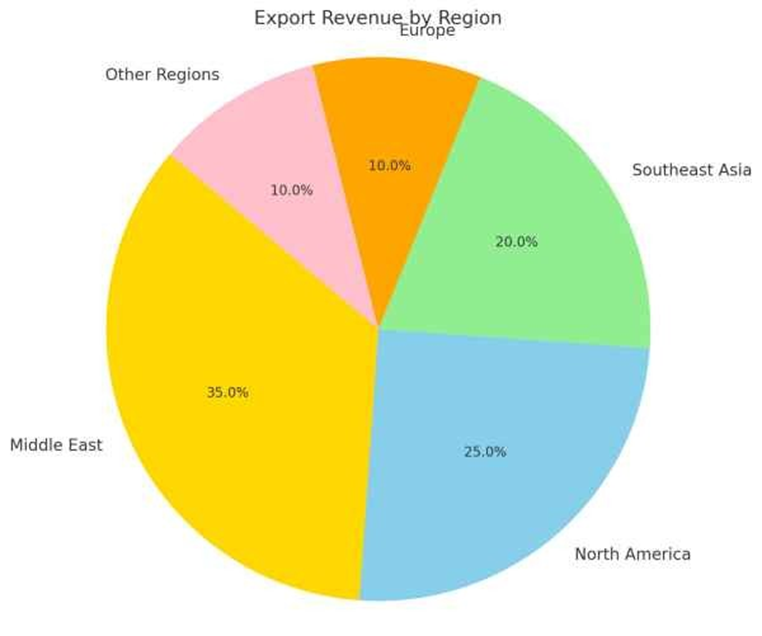
Here is the pie chart showing the percentage distribution
of export revenue by region for Zen Technologies.
Insights:
- The Middle East is the dominant export market, followed
by North America and Southeast Asia.
- Diversification into European and African markets can
improve global reach.
3. Grid Method Analysis
Using a Grid Method, Zen
Technologies' strategic decisions are analyzed based on cost, quality,
time-to-market, and technological advancement.
|
Decision Criteria |
Weight |
Option A (Current Focus) |
Option B (Expanded Global Reach) |
|
Cost |
25% |
8 |
7 |
|
Quality |
30% |
9 |
8 |
|
Time-to-Market |
20% |
7 |
8 |
|
Technological Advancement |
25% |
8 |
9 |
|
Weighted Score |
100% |
8.15 |
8.2 |

Here is the line graph comparing the weighted scores for
Option A (Current Focus) and Option B (Expanded Global Reach) across decision
criteria
Insights:
- Expanding global reach offers a marginally higher score
due to technological advancement and faster market penetration.
4. PDCA Cycle Implementation
Plan:
- Identify key market opportunities in Europe and Asia.
- Develop a marketing strategy to promote counter-drone
solutions.
Do:
- Launch pilot programs in target markets.
- Partner with local defense contractors.
Check:
- Analyze feedback from pilot programs.
- Measure sales, customer satisfaction, and market
response.
Act:
- Scale successful initiatives.
- Enhance R&D for regional-specific solutions.
5. Additional Analytical Insights
Patent Portfolio Analysis: Zen Technologies has filed or received over 160 patents,
showcasing its innovation-driven approach. A breakdown of patents:
|
Category |
Number of Patents |
Percentage (%) |
|
Training Simulators |
70 |
43.75% |
|
Counter-Drone Systems |
50 |
31.25% |
|
Virtual Training Tech |
25 |
15.63% |
|
Others |
15 |
9.37% |
Revenue Growth Trend (Last 5 Years): Zen Technologies has demonstrated consistent revenue
growth.
|
Year |
Revenue (INR Crore) |
|
2019 |
150 |
|
2020 |
175 |
|
2021 |
200 |
|
2022 |
250 |
|
2023 |
300 |
Insights:
- The strong patent portfolio and steady revenue growth
validate Zen Technologies’ strategic focus on innovation and market
expansion.
Key Recommendations
- Enhance Global Partnerships:
- Collaborate with regional defense firms to localize
solutions.
- Invest in Marketing:
- Highlight certifications and indigenous development to
build trust.
- Focus on Emerging Markets:
- Target Asia-Pacific and Africa for cost-effective
training solutions.
- Leverage Data Analytics:
- Use customer feedback and simulation data to refine
products.
- Expand Product Portfolio:
- Innovate in areas like AI-based defense analytics and
real-time battlefield simulations.
Conclusion
Zen Technologies' strong R&D
foundation, extensive patent portfolio, and quality certifications position it
as a global leader in defense technology. By expanding its global reach,
investing in emerging markets, and continuously innovating, Zen Technologies
can further solidify its market position and drive sustainable growth.
References
- Company website: Zen
Technologies
- ISO Certification details: ISO official site
- Industry reports: Defense Technology Insights 2024


No comments:
Post a Comment